

Egyptian Cotton vs Sea Island Cotton: A Guide to Luxury Shirtmaking Fibres
Before construction, fit and sartorial detailing, the quality of a shirt begins with the material itself. More precisely, with the fibre from which the yarn is spun.
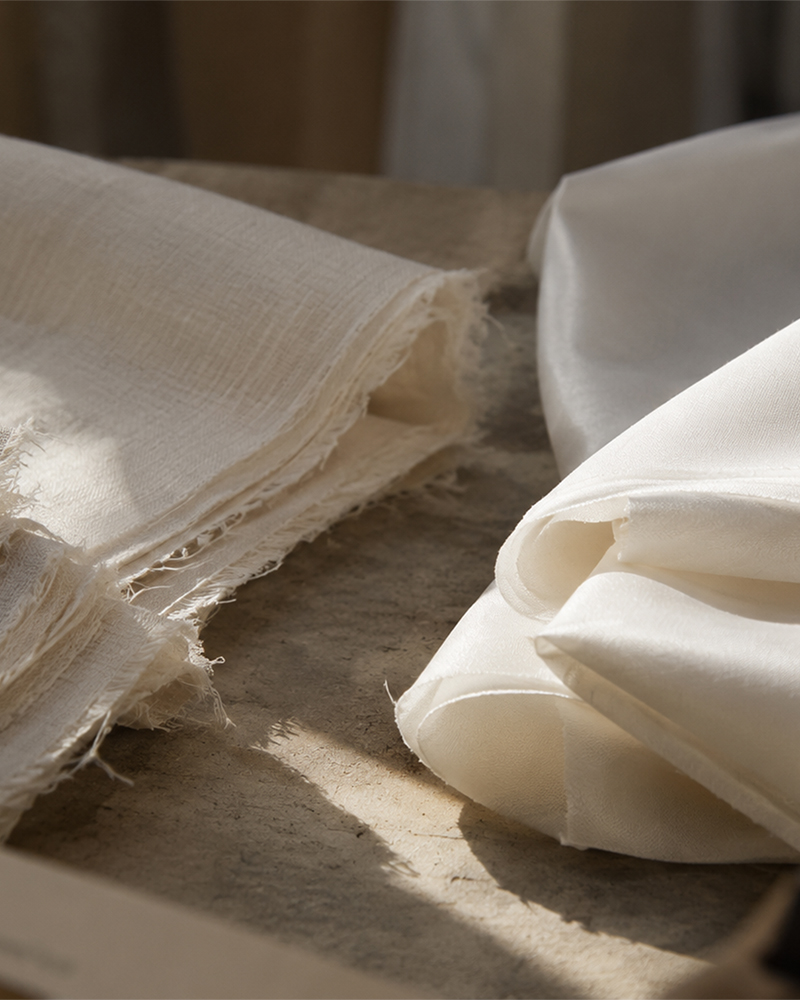
In high-end shirtmaking, Egyptian cotton and Sea Island cotton hold a distinctive position. The length, fineness and uniformity of their fibres make it possible to produce refined, durable yarns and fabrics with a handle that lower-grade cottons struggle to replicate.
Yet the two names are not interchangeable and, more importantly, neither tells the full story of a fabric’s quality on its own.
For fashion houses, understanding the difference between Egyptian cotton and Sea Island cotton means being able to select a material that reflects the character of the collection, the construction of the shirt and the positioning of the finished product.
Because in luxury, the raw material is not simply where the process begins.
It is already part of the design.
Premium Cotton Fibres in Luxury Shirtmaking: Why Quality Begins with the Yarn
When assessing premium cotton fibres, one of the first parameters to consider is fibre length, technically known as staple length.
But length alone does not determine quality: fineness, strength, maturity and uniformity all contribute to the performance of the yarn that can ultimately be produced.
Extra Long Staple cottons, or ELS cottons, sit at the upper end of the spectrum in terms of fibre length. As a technical reference, Cotton Incorporated classifies cotton as “extra long” when the upper-half mean length exceeds 1.26 inches, or approximately 32 mm.
Longer fibres make it possible to spin finer yarns with fewer overlapping fibre ends. This can result in a smoother surface, a softer handle and greater strength — all particularly valuable qualities in fine shirting fabrics.
The quality of the fibre, however, is only the beginning.
Spinning, yarn count, weaving and finishing all work alongside the raw material to determine the final result.
For this reason, two fabrics made from cottons belonging to the same broad family can behave very differently once they are turned into shirts.
Egyptian Cotton: Origin, Characteristics and Advantages
Egyptian cotton owes much of its reputation to the growing conditions found along the Nile and, in particular, across its fertile delta.
Over time, climate, soil and water availability have supported the cultivation of varieties known for their long, high-quality fibres.
It is important, however, to distinguish geographical origin from quality classification.
Not all cotton varieties grown in Egypt share the same characteristics. Egyptian production includes different Giza cultivars, each with its own category and technical parameters.
The most highly selected varieties reach Extra Long Staple standards and are especially prized for producing fine yarns and luxury fabrics.
In Egyptian cotton shirts, premium-quality raw material can translate into a clean surface, soft handle, good durability and a naturally refined lustre.
This combination has made Egyptian cotton a benchmark in both the premium and luxury segments, where it can be used for sophisticated poplins, twills, voiles and many other fabric constructions.
Yet the name alone is never enough.
Variety, yarn quality, weave and finishing remain essential when assessing the true quality of the final fabric.
Sea Island Cotton: One of the Rarest and Most Prestigious Cotton Fibres
If Egyptian cotton is one of the great references in premium shirtmaking, Sea Island cotton occupies an even more exclusive niche.
Authentic West Indian Sea Island Cotton is grown in the West Indies under particularly favourable climatic conditions and is distinguished by exceptionally long, fine and uniform fibres.
WISICA, the association dedicated to protecting the material, cites an average fibre length of around 50 millimetres, while overall production remains extremely limited compared with the global cotton market.
These characteristics make it possible to spin exceptionally fine yarns while maintaining strength and consistency.
In the finished fabric, this can create a silky handle, an exceptionally smooth surface and a distinctive natural lustre.
Its rarity inevitably contributes to its positioning, but it would be reductive to describe Sea Island as a luxury cottonsimply because it is scarce.
Its value lies above all in the combination of fibre length, fineness and exceptional uniformity.
For a fashion house, choosing Sea Island cotton therefore represents a deliberate product decision: using an exceptional raw material for a shirt intended for the most exclusive tier of a collection.
Egyptian Cotton vs Sea Island Cotton: A Direct Comparison
The difference between Egyptian cotton and Sea Island cotton cannot simply be reduced to the question of which is “better”.
Both can achieve extremely high standards of quality, but they differ in characteristics, availability and market positioning.
Egyptian cotton encompasses a broader range of varieties and quality levels. Its most prestigious cultivars can produce exceptionally fine and durable fabrics and have long been established within luxury shirtmaking.
West Indian Sea Island cotton occupies an even rarer category.
Its exceptional fibre length and uniformity allow for extremely fine yarns and a notably silky feel, while its limited availability inevitably has an impact on cost.
| Characteristic | Egyptian Cotton | Sea Island Cotton |
|---|---|---|
| Origin | Egypt, particularly the Nile Delta | West Indies / Caribbean |
| Fibre | Long to Extra Long Staple depending on variety | Extra Long Staple, exceptionally long |
| Staple length | Varies according to cultivar | Approximately 50 mm for West Indian Sea Island |
| Handle | Soft, refined and compact | Exceptionally soft and silky |
| Lustre | High in the finest qualities | Natural and particularly pronounced |
| Availability | Broader, with different quality levels | Extremely limited |
| Positioning | Premium / luxury | Ultra-high-end luxury |
| Cost | High and variable according to variety and fabric | Generally very high |
The choice should therefore begin with the product itself.
A shirt does not automatically become better simply because it uses the most expensive fibre.
It becomes better when material, construction and positioning work together towards the same objective.
How Cotton Fibre Affects the Handle, Drape and Durability of a Shirt
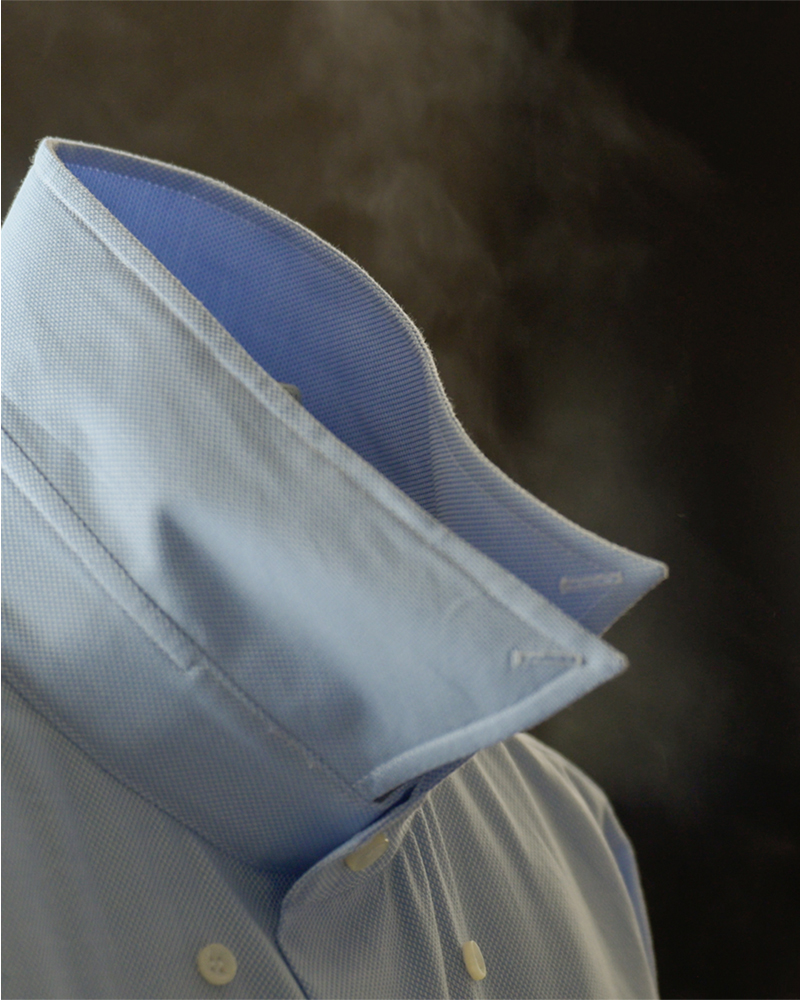
The quality of cotton for shirts becomes truly perceptible when the yarn is transformed into fabric and that fabric becomes part of the garment’s construction.
Long, fine and uniform fibres can contribute to smoother, stronger and more consistent yarns.
This affects the cleanliness of the fabric surface, the feel against the skin and the material’s ability to retain its characteristics over time.
An exceptional fibre, however, does not determine drape on its own.
Yarn count, twist, weave, density and finishing all have a major influence on how a fabric ultimately behaves.
A poplin made from very fine cotton may offer a crisp, sophisticated surface, while a different construction may prioritise softness, fluidity or a fuller handle.
This is precisely why choosing shirting fabrics should always be approached in relation to the garment rather than as a separate decision.
Giza and Sea Island cotton, for example, may both be used in luxury collections, but their real performance must be assessed against the pattern and construction of the shirt.
The fibre defines the potential of the material.
The design process turns that potential into tangible quality.
Authenticity and Certification: How to Identify Genuine Premium Cotton
The more valuable a material becomes, the more important it is to verify its origin and authenticity.
The term “Egyptian cotton”, for example, should not automatically be interpreted as synonymous with ELS cotton or with a particular Giza variety.
To protect the designation, the Egyptian Cotton Association manages the Egyptian Cotton™ trademark and an accreditation programme that includes audits and fibre DNA testing designed to verify origin and help prevent misleading labelling.
West Indian Sea Island Cotton also has dedicated systems in place to safeguard authenticity.
WISICA uses specific identification measures to ensure that material marketed under the Sea Island designation genuinely corresponds to the original fibre.
For fashion houses, this goes beyond commercial certification.
Traceability and documentation provide greater visibility across the supply chain and allow brands to communicate product characteristics with greater accuracy.
The same principle underpins a transparent and responsible supply chain: significant claims about raw materials should be supported by verifiable information.
Material selection, supplier controls, certifications and traceability therefore become part of the wider quality framework.
In contemporary luxury, the authenticity of the material is as much a part of quality as the way it feels.
Choosing the Right Cotton for a Luxury Shirt Collection
For a brand, choosing between Egyptian cotton, Sea Island cotton and other luxury shirting fabrics is a decision that affects aesthetics, product strategy and market positioning at the same time.
The starting point should not be the search for the most expensive fibre, but the question that should guide the entire collection:
What kind of shirt is this material meant to become?
A crisp, formal construction may call for different characteristics from a soft, fluid shirt.
An exclusive capsule collection may justify the use of an exceptionally rare fibre, while a broader collection may require a different balance between quality, availability, production continuity and budget.
This is where the role of a specialist shirtmaking workshop becomes strategic.
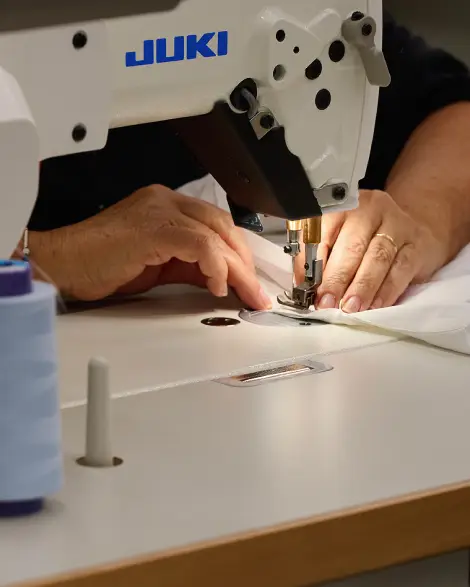
A manufacturing partner can bring fabric, pattern making and construction together, using samples and prototypes to assess how the material actually responds to the design.
A structured luxury garment manufacturing process then makes it possible to carry the characteristics established during sampling through to production while maintaining control and consistent quality.
Because premium cotton for shirts can only express its true value when it is worked in a way that respects its characteristics.
In luxury, selecting an exceptional fibre is only the beginning.
Knowing how to transform it is what makes the difference.