

Luxury Women’s Shirt: How Structure, Fit and Craftsmanship Define Excellence
The women’s shirt occupies a distinctive place in today’s luxury wardrobe. It can be structured or fluid, sharply tailored or seemingly effortless, rooted in formal codes or reinterpreted through a more contemporary silhouette. Behind this versatility, however, lies a level of manufacturing complexity that often goes unseen.
In a high-end women’s shirt, quality depends on far more than fabric or design alone. It comes from the balance between pattern making, proportions, construction and the way the material behaves on the body. A slight change in the position of a dart, the structure of a collar or the fall of a shoulder can completely alter the character of the garment.
This is where the know-how behind Italian-made shirts meets the needs of contemporary womenswear: translating a creative vision into a precise construction while preserving lightness, identity and manufacturing quality.
In luxury shirtmaking, what appears simple is often the result of highly sophisticated work.
The Women’s Shirt in the Contemporary Luxury Wardrobe
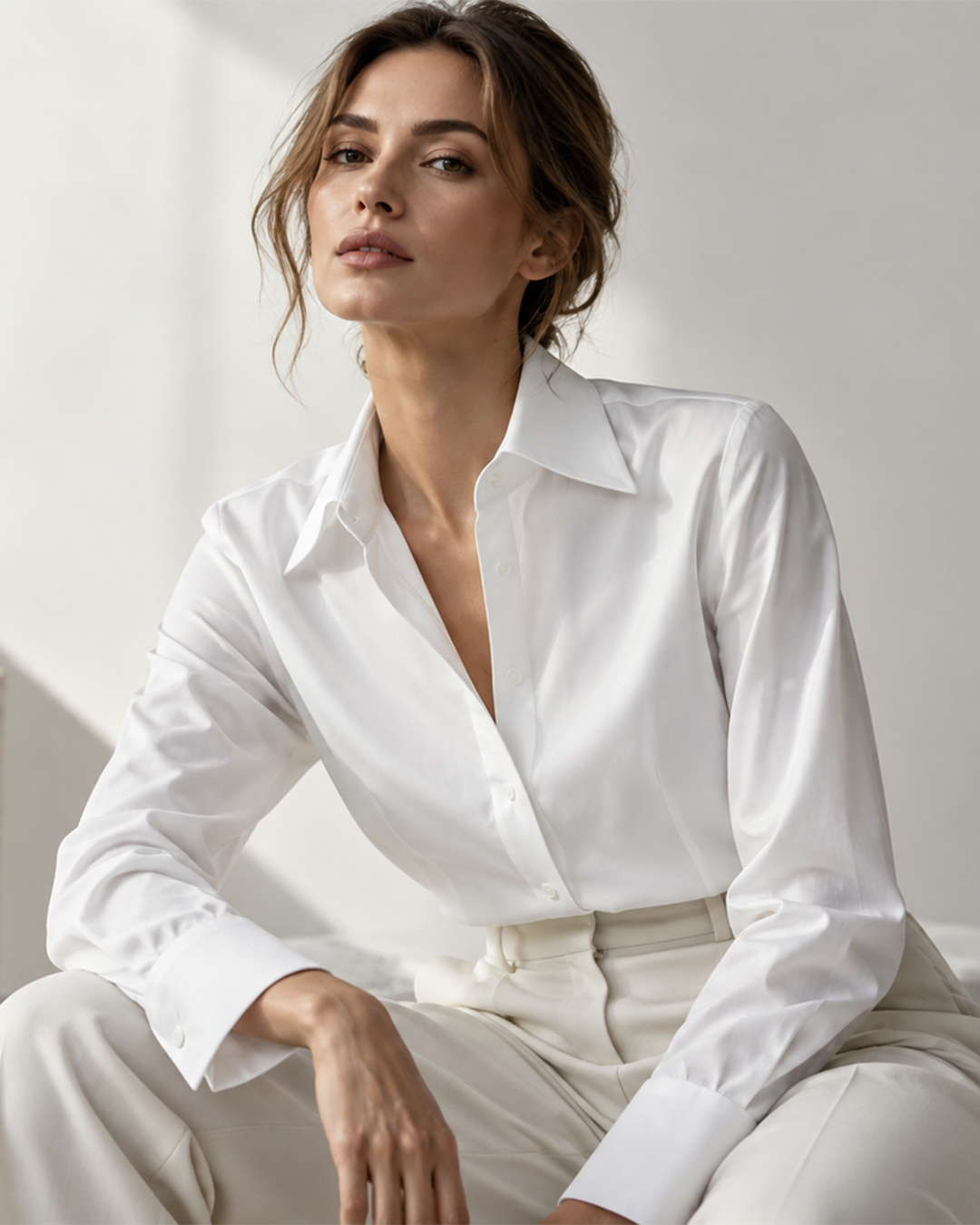
Few garments can shift identity as naturally as a shirt. In contemporary womenswear, it can sit beneath a tailored suit, be styled through softer and more relaxed constructions, or become the focal point of a look through volume, proportion and material.
This versatility has made the luxury women’s shirt an especially interesting area of experimentation for fashion houses. The classic white shirt remains a reference point, but around it exists a much broader vocabulary: oversized silhouettes, fluid constructions, sculptural volumes, altered lengths and details borrowed from both traditional menswear and modern womenswear.
For manufacturers, however, this creative freedom also increases technical complexity. Every aesthetic variation must be translated into a workable solution through pattern making, fabric selection and the production sequence.
This is also why the development of men’s and women’s shirts draws on a shared technical heritage while still requiring different design sensitivities.
The quality of the final garment depends on the ability to interpret the fashion house’s creative language and build a consistent manufacturing process around it.
Structure and Construction: What Defines a High-End Women’s Shirt
An elegant women’s shirt may look remarkably simple. Yet that apparent simplicity leaves very little room for error.
Quality can first be recognised in the construction: consistency of stitching, balance between the different parts of the garment, clean finishing, stability of collars and cuffs, and the ability of the shirt to hold its shape without becoming rigid.
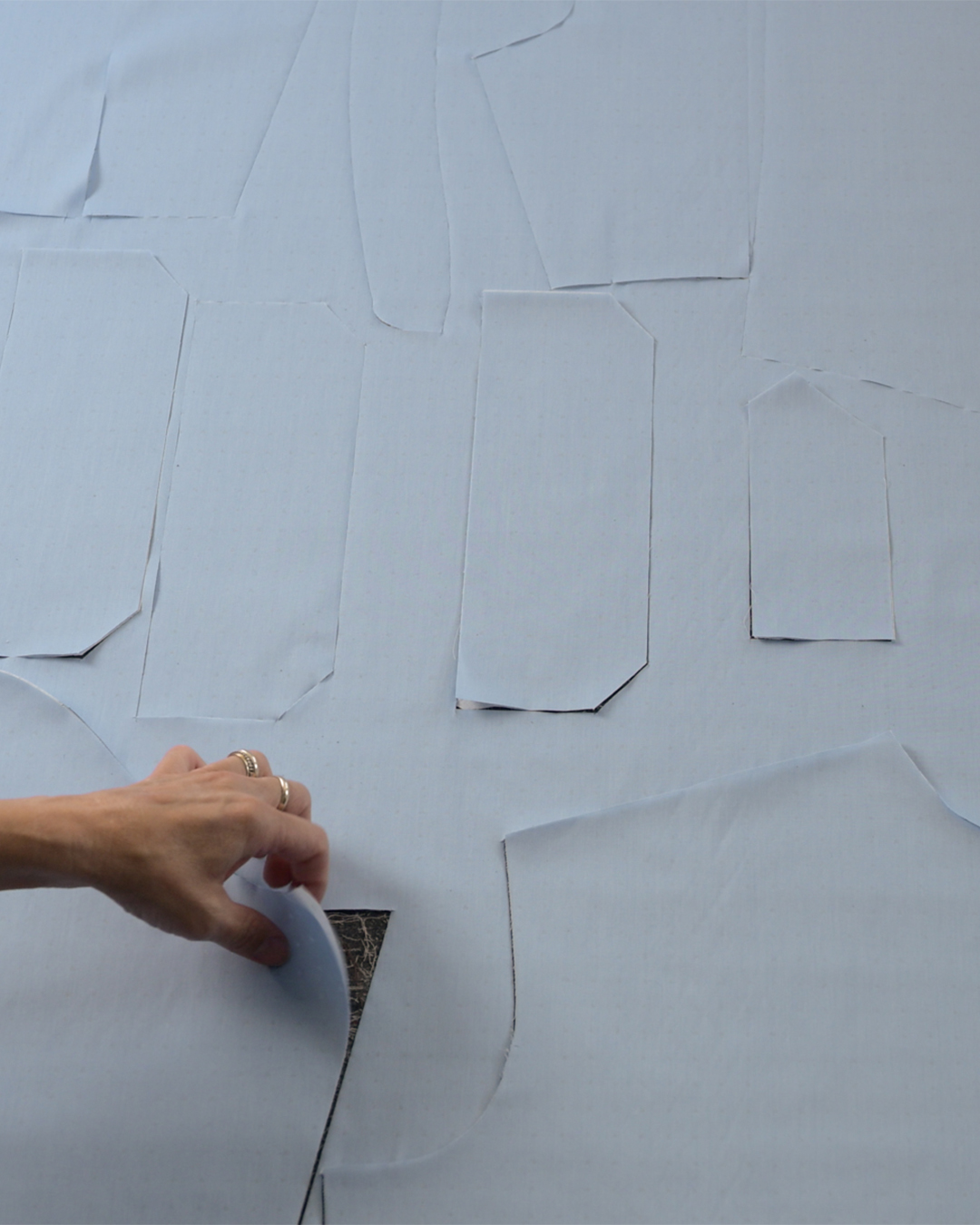
In high-end manufacturing, these elements are defined from the earliest stages of pattern development. The way a shoulder connects to a sleeve, the treatment of internal seam allowances or the construction of the front placket all affect both appearance and fit.
Stitching precision is another tangible indicator of quality. In Gallia’s production, for example, certain operations can reach up to 10 stitches per centimetre: a level of accuracy that shows just how much perceived quality depends on technical decisions that are almost invisible to the eye.
This culture of construction is what separates a garment that is simply well made from one designed for the luxury segment.
Quality does not come from one exceptional detail, but from the consistency of the entire garment.
Fit and Silhouette: From Fluid Lines to Tailored Constructions
In women’s shirtmaking, fit is one of the areas where design and stylistic identity interact most directly.
A bespoke women’s shirt, or a garment developed according to precise specifications, may follow the body through darts and shaping, create a sharper silhouette or move away from the body entirely through softer, oversized volumes.
None of these approaches is inherently more sartorial than another. What matters is control of the silhouette.
A close-fitting shape requires careful management of the bust, waist, shoulders and armhole. An oversized construction presents different challenges: proportion, dropped shoulders, sleeve length and fabric behaviour all become essential if volume is to remain intentional rather than uncontrolled.
Even a silhouette that appears relaxed must therefore be carefully designed.
This is one of the most interesting aspects of contemporary luxury shirtmaking: precision does not necessarily mean rigidity. On the contrary, highly accurate construction is often what allows a garment to look natural, light and effortless.
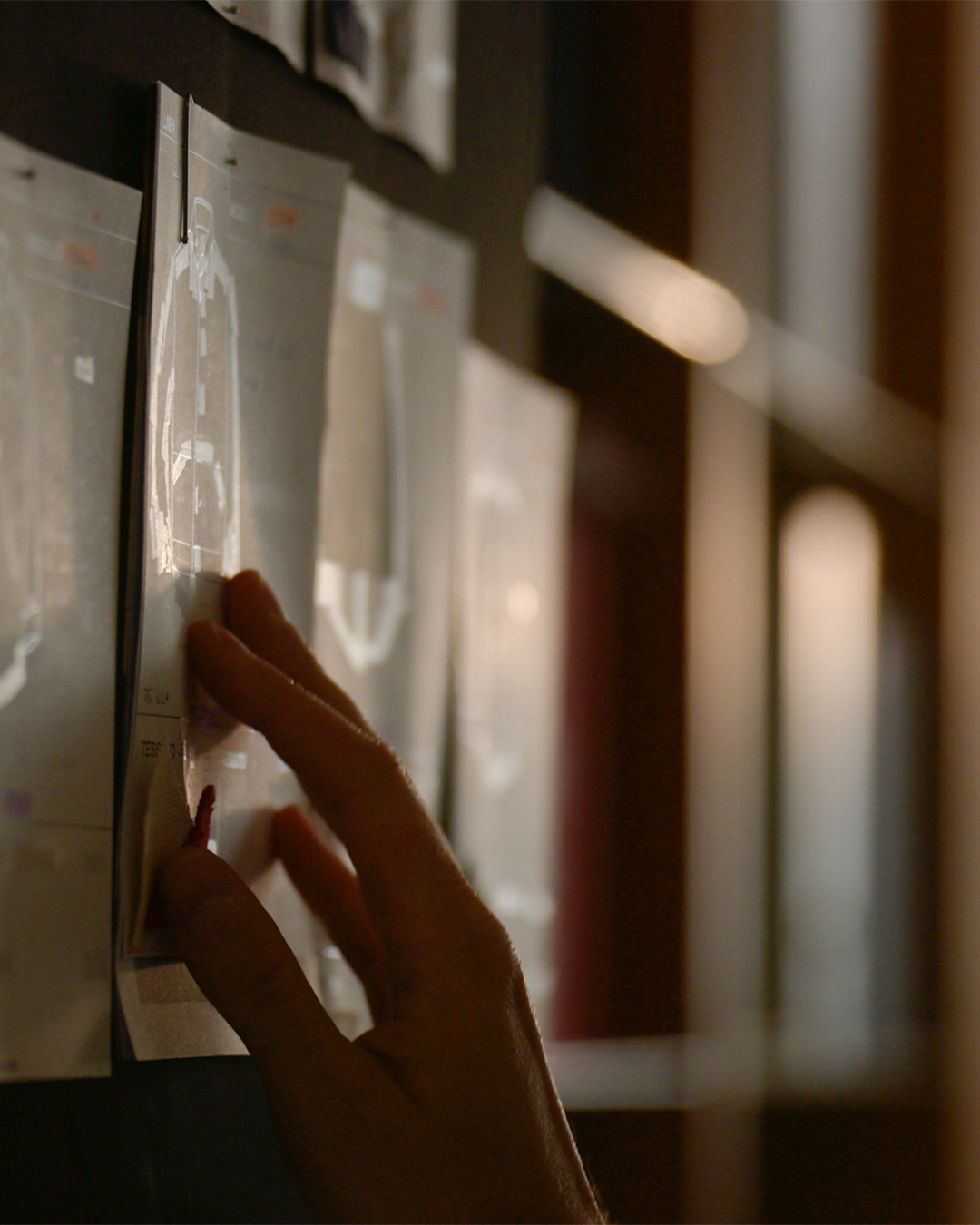
Behind a successful fit there is always pattern making capable of understanding not only measurements, but also how the designer wants the garment to interact with the body.
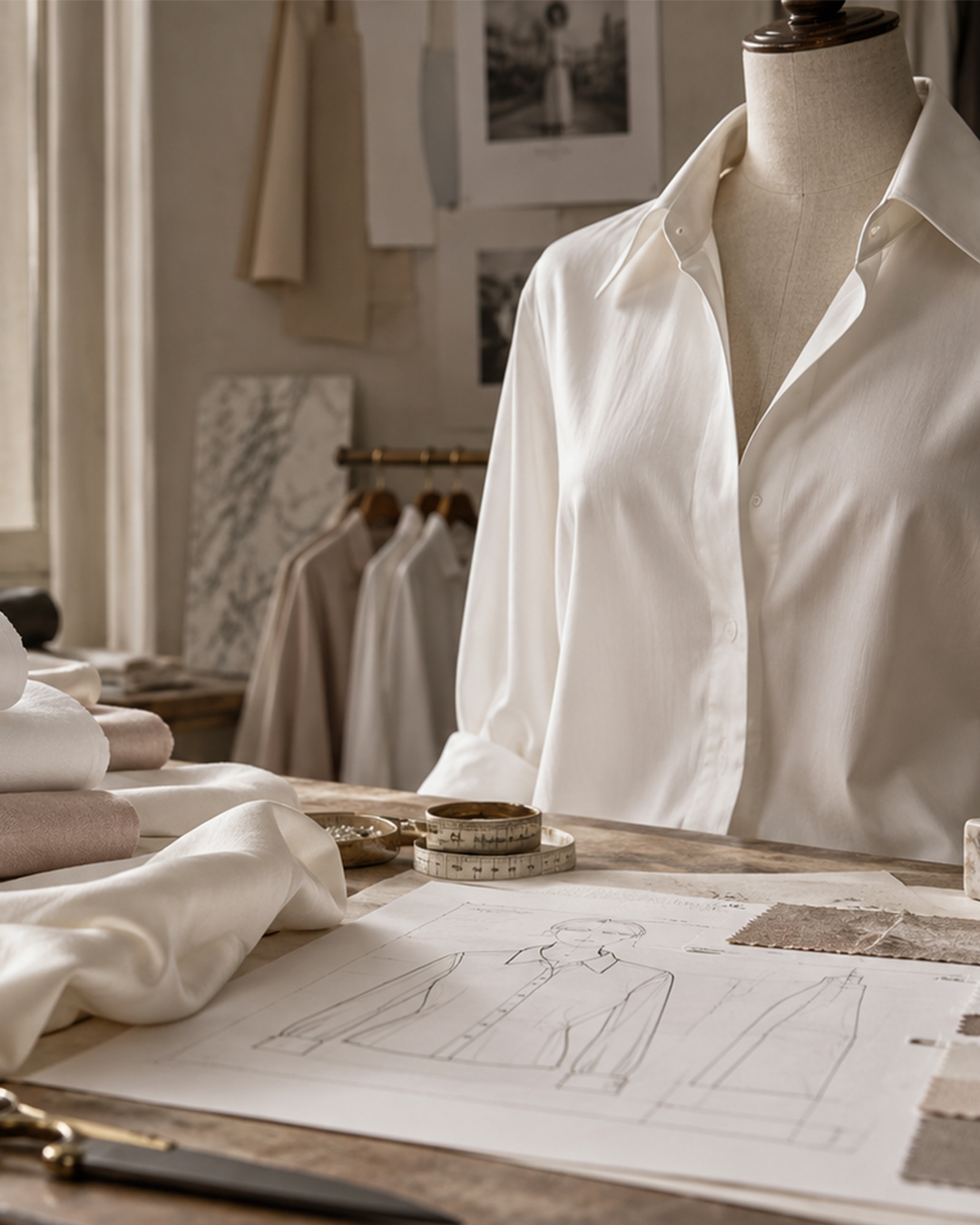
Sartorial Details in Womenswear: Collars, Cuffs, Darts and Finishing
In a luxury shirt, details are rarely purely decorative. More often, they influence the character and structure of the garment itself.
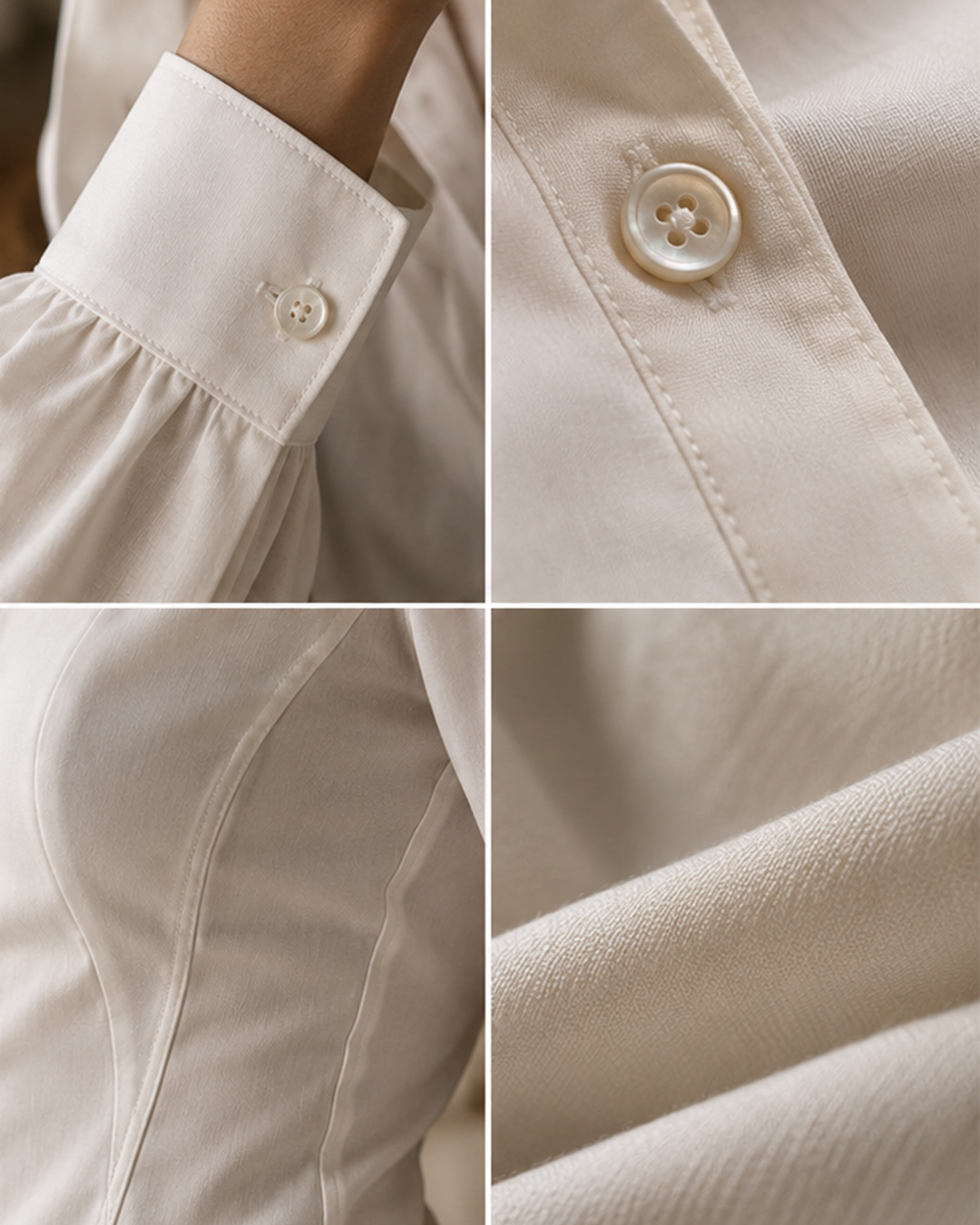
The collar is perhaps the clearest example. Its height, spread, point length and internal construction can completely change the perception of a shirt. The same applies to cuffs, which may remain understated or become a more prominent part of the silhouette.
In womenswear, darts, gathers, pleats, concealed or asymmetric plackets and more complex constructions introduce additional challenges in the management of volume.
Alongside these visible elements are details that the wearer may register less consciously: clean internal finishing, stitch tension, consistent topstitching and reinforcement.
Craftsmanship emerges from the relationship between all these elements.
A perfect seam, considered in isolation, does not define quality. What matters is the ability to make collar, shoulder, sleeve, body and fabric work together as a balanced whole.
In luxury, the best detail is not necessarily the one that draws attention. It is the one that makes the entire garment work better.
Fabrics and Materials for a Luxury Women’s Shirt
Changing the fabric can, in many cases, change the shirt completely.
Fine cottons can provide crispness and definition; silk and other fluid materials alter the drape and create a different relationship with the body; linen introduces lightness and natural irregularity; while blended and more technical fabrics can improve performance, comfort and stability.
For this reason, women’s shirt fabrics are not selected on appearance alone. Handle, weight, elasticity, transparency and response during construction all influence the final garment.
A women’s summer shirt, for example, may require lightness and breathability without sacrificing stitching precision. A women’s winter shirt may instead use heavier weights, more structured weaves or fabrics capable of building greater volume.
The relationship between fabric and pattern therefore becomes fundamental.
A very fluid material will not respond to a dart or collar in the same way as a compact poplin, just as silk requires different cutting and sewing techniques from a more structured cotton.
Understanding fabric selection for shirts therefore means recognising that the material does not enter the process after the design has been completed.
It is part of the design process itself.
Men’s and Women’s Shirtmaking: Manufacturing Differences and Shared Expertise
A men’s shirt and a women’s shirt share an important construction heritage. Collars, cuffs, facings, sleeves, topstitching and many assembly principles belong to the same shirtmaking tradition.
What changes is the way these elements relate to the body and to the creative direction of the garment.
In women’s shirtmaking, pattern development may involve more complex management of shape through darts, panel lines, volumes and proportions.
The shirt may follow the body more closely or, at the opposite extreme, use oversizing as a deliberate design element. Highly fluid or lightweight fabrics can also introduce different manufacturing challenges.
Men’s shirtmaking generally relies on more established construction codes, although it too has increasingly embraced less traditional silhouettes and experimentation in recent years.
The underlying manufacturing expertise is therefore shared, but it cannot simply be applied in exactly the same way.
Producing both means understanding the architecture of a shirt in depth while also knowing when that architecture needs to be reinterpreted.
This is where experience becomes essential: knowing the rules well enough to adapt them without losing precision.
Contract Manufacturing Luxury Women’s Shirts: The Role of a Specialist Shirtmaker
For a fashion house, entrusting the development of a women’s shirt to an external manufacturing partner means sharing far more than a technical specification.
It means handing over part of the process through which the brand’s creative identity becomes a physical product.
A specialist shirtmaking workshop working in the luxury segment must therefore be able to interpret the project rather than simply execute it.
Pattern making, prototyping, sampling and fitting sessions help identify potential issues before production begins, while a structured luxury garment manufacturing process ensures that the same level of quality can be maintained when moving from a single sample to full collection volumes.
Knowledge of the Italian tailoring tradition becomes particularly valuable at this stage.
Its value lies not only in manual execution, but in the ability to understand materials and constructions, propose technical solutions and preserve the designer’s original intention throughout industrialisation.
For this reason, in high-end contract manufacturing, the most effective relationship is not simply one between client and supplier.
It is a collaboration between two different areas of expertise working on the same product.
The fashion house retains its creative vision. The manufacturing partner gives that vision a structure capable of moving through sampling, production and future seasons without losing its identity.