Spring vs Autumn Production: Managing Mid-Season Collections in Fashion
In the fashion industry, seasonal planning is one of the most complex aspects of production. While summer and winter collections tend to follow more defined patterns, mid-season collections require a more strategic approach. Spring vs autumn production involves careful management of materials, timelines and garment design.
Spring and autumn collections sit in a transitional space between temperatures, consumer behavior and commercial cycles. Brands are required to develop versatile garments designed to adapt to changing weather conditions and more dynamic usage compared to extreme seasons.
This inevitably translates into greater production complexity. Only a structured and carefully managed process can prevent delays or inefficiencies—often critical given the shorter selling window of these collections.
For this reason, developing transitional collections requires strong integration between design, pattern making and production structure. In advanced manufacturing environments, such as those described in our page on industrial efficiency, the ability to coordinate these variables becomes essential to maintaining both quality and delivery timelines.
Mid-season collections therefore represent both a technical and creative challenge: not just a matter of style, but a balance between materials, functionality and production planning.
Spring vs Autumn: Two Sides of the Same Transition
From both a stylistic and production standpoint, spring and autumn represent opposite phases of the same climatic transition—while remaining similar in terms of complexity and production deadlines.
Spring marks the shift from winter to milder temperatures. Collections must gradually lighten garments while still providing a degree of thermal protection in the early weeks of the season.
Autumn, on the other hand, bridges the transition from summer to winter. Garments begin to introduce more structure and layering, without immediately becoming heavy.
This dynamic makes mid-season collection development particularly interesting. Design must focus on trans-seasonal garments, capable of adapting to different weather conditions through layering and styling versatility.
In this context, collaboration with a manufacturing partner becomes essential. Specialized structures such as a contract-based sartorial laboratory enable brands to translate creative concepts into technically consistent and industrially viable garments.
Key Differences Between Spring and Autumn Production
Although both are considered transitional seasons, spring vs autumn production presents several key differences.
Spring collections typically prioritize lightness, mobility and brighter color palettes. Garments are designed to accompany rising temperatures and often feature softer, more fluid silhouettes.
Autumn collections, by contrast, mark the beginning of colder seasons. Materials become more substantial and garment construction moves toward progressive layering.
From a production perspective, these differences impact several elements:
Mid-season collections also require a high level of precision in garment design. Construction quality becomes essential to ensure comfort and durability—core principles within our approach to contemporary artisanal quality.
Calendar and Timing: When to Produce Spring and Autumn Collections
One of the most delicate aspects of managing collections is production timing. In fashion, development timelines often anticipate the selling season by several months.
Spring/Summer collections are typically developed during the preceding autumn and winter, while Fall/Winter collections begin development during the spring months.
This anticipation allows brands to manage all stages of the process:
creative development
prototyping
industrialization
production
Advanced digital technologies, such as those explored in our article on 3D prototyping in fashion, are transforming this phase by enabling brands to reduce both time and costs during sampling.
Mid-season planning must also align with other key moments in the fashion calendar, such as resort or cruise collections, which are becoming increasingly relevant in today’s market.
In this context, seasonal management becomes a true production strategy, as further explored in our article on seasonal production in fashion.
Materials and Fabrics: Trans-Seasonal Garments
One of the most complex aspects of mid-season production is material selection.
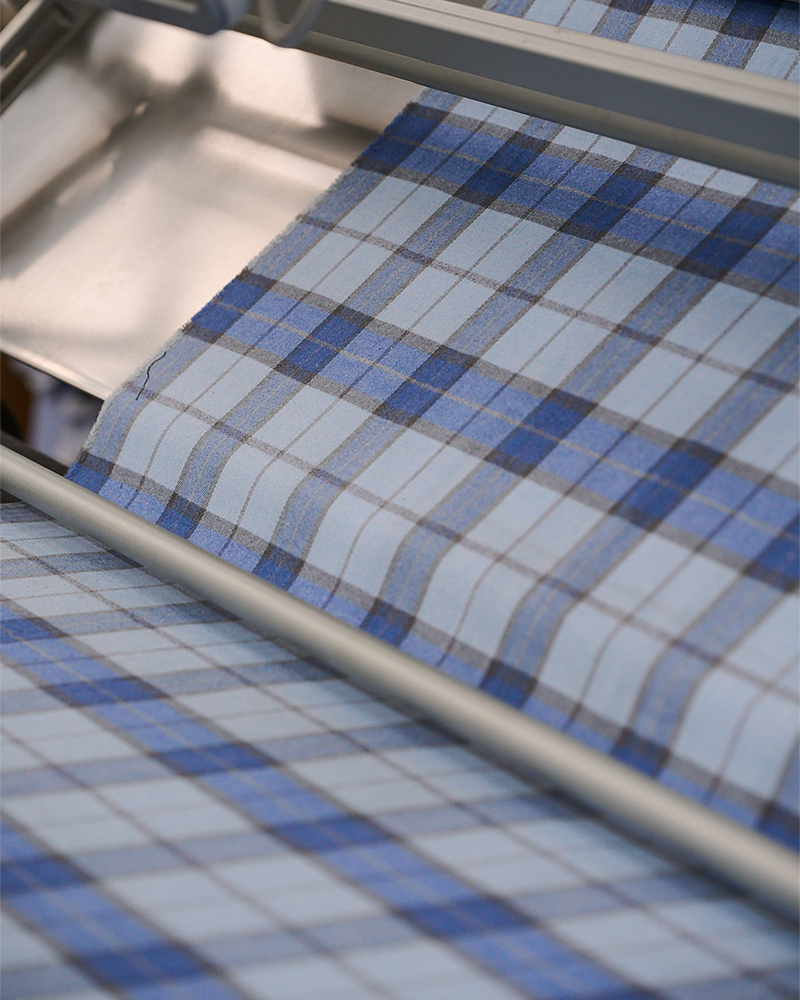
Fabrics used for spring and autumn collections must ensure climatic versatility, maintaining a balance between lightness and protection. Common materials include structured cottons, poplins, blended fabrics and lightweight wool.
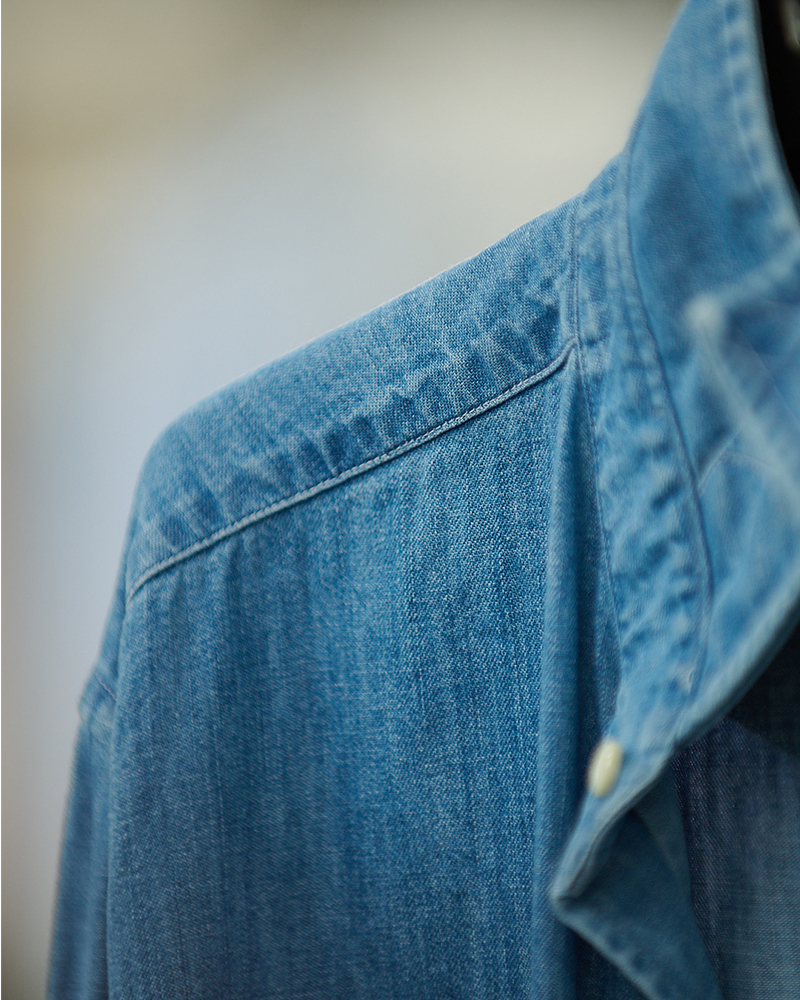
In shirtmaking, fabric plays a fundamental role in defining the garment. Weight, weave and finishing directly affect how the material behaves over time.
Mid-season collections require materials capable of adapting to multiple contexts of use. The result is more versatile garments, designed to be worn across different moments of the year.
Confezioni Gallia Best Practices for Mid-Season Collections
Managing mid-season collections requires strong integration between creativity and production structure. For this reason, collaboration between brand and manufacturing partner plays a central role.
At Confezioni Gallia, work on trans-seasonal collections begins at the design stage. Pattern making, sampling and industrialization are coordinated to ensure alignment between creative concept and production.
Our experience in contract manufacturing for international maisons allows us to manage even the most complex collections with precision. Each garment is developed within a production system that combines artisanal craftsmanship and industrial organization.
This integration of sartorial expertise and industrial structure is at the core of our production philosophy. It is the same principle that guides our approach to contract sartorial production, where each garment is built to ensure quality, consistency and long-term stability.
Managing mid-season collections ultimately means anticipating market needs, designing versatile garments and coordinating every stage of production with precision. It is a complex balance that requires technical expertise, manufacturing experience and a clear vision of the fashion supply chain.
In this context, our direct experience in private label production has consistently enabled us to anticipate client needs and respond promptly to requests or minor issues—resolving them efficiently and without unnecessary complexity.