


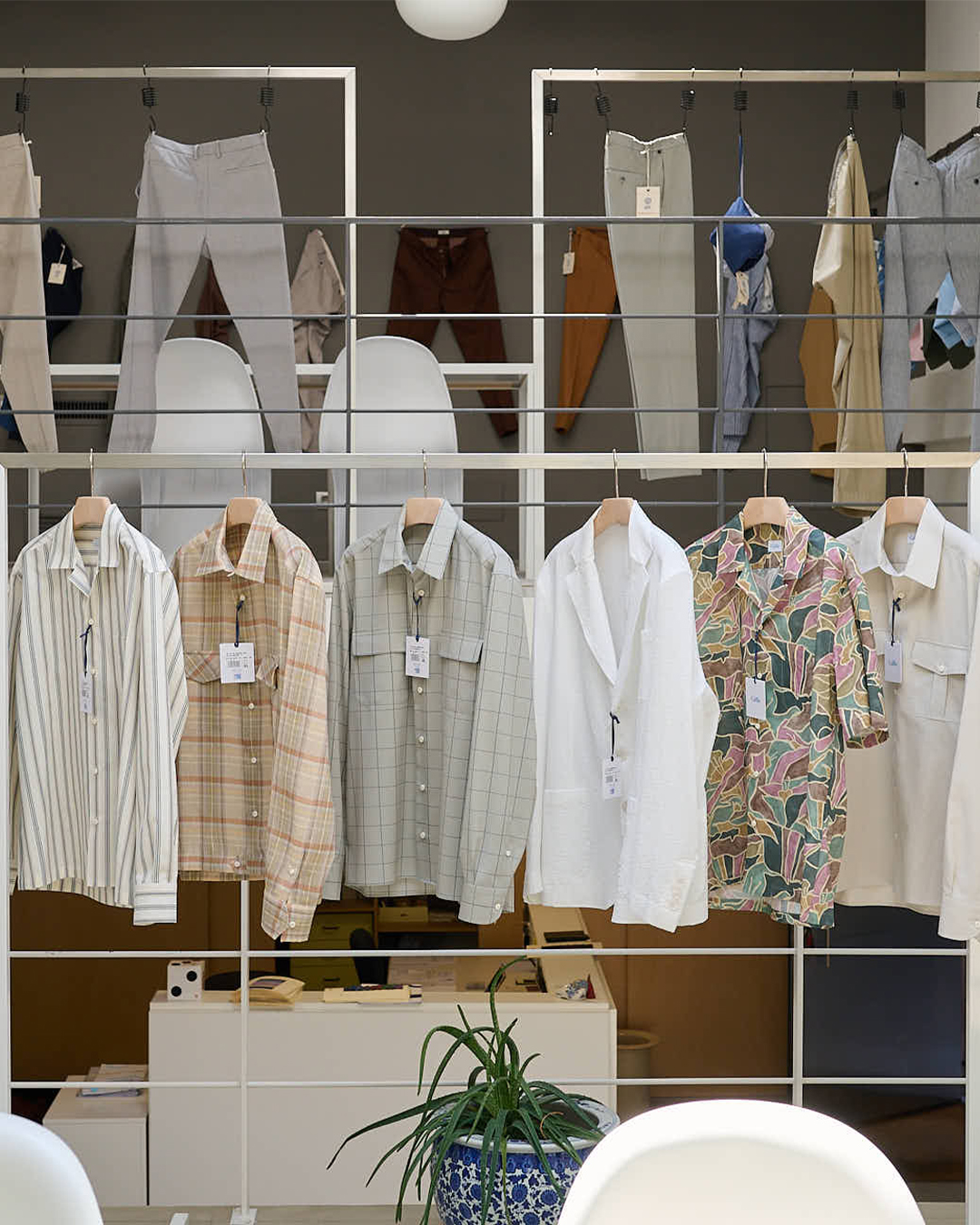

Clothing Production MOQ: What It Means and What to Expect from a Manufacturing Partner
For many emerging fashion brands and independent designers, the clothing production MOQ is one of the first practical challenges encountered when moving from an idea to actual production. Understanding what MOQ means and how it is managed within contract manufacturing is essential for planning a collection correctly.
In fashion, MOQ stands for Minimum Order Quantity: the minimum number of garments a manufacturer requires in order to start production.
In luxury and high-end contract manufacturing, however, the MOQ is rarely just a fixed number. It is the result of a balance between production organisation, garment complexity, materials, lead times and manufacturing sustainability.
Many brands initially see the MOQ as a rigid barrier. In high-end manufacturing, however, volume management depends largely on the structure of the project and the level of collaboration between the brand and the manufacturer.
Within luxury contract manufacturing, the quality of the process matters just as much as the final quantity. Effective planning means building a production system that remains stable, consistent and sustainable over time.
MOQ: Definition and Meaning in Fashion
In fashion manufacturing, MOQ refers to the minimum quantity required for a production run to be technically and economically viable.
Each manufacturer establishes its minimum quantities according to its production structure, the materials involved and the complexity of the required processes.
In fast fashion, MOQs are often very high because production systems are designed around large, standardised volumes.
Luxury manufacturing follows a different logic. Value does not come primarily from quantity, but from construction quality and control over the production process.
For this reason, the MOQ in high-end garment manufacturing cannot be interpreted as a single universal number.
A sophisticated shirt requiring complex construction processes follows very different production logic from a standard industrial basic.
The production model also has a direct effect on MOQ. There are significant differences between private label and contract manufacturing, particularly in terms of customisation, product development and volume management.
Understanding what MOQ really means allows brands to approach discussions with manufacturers with much greater awareness.
What Determines MOQ in a Specialist Clothing Manufacturer?
MOQ is not determined solely by the number of garments requested. Within a specialist manufacturing environment, several factors influence whether a production run is sustainable.
The main variables include:
complexity of the style;
number of colour variations;
material selection;
required manufacturing operations;
production lead times;
level of customisation.
Product development also has a direct impact on MOQ.
A garment requiring advanced prototyping, multiple fittings or specific high-end construction processes demands a different technical commitment from a standardised product.
In the luxury segment, construction quality also requires more extensive checks and more sophisticated processes. The manufacturer therefore needs to maintain a balance between craftsmanship and production efficiency.
This balance is precisely why choosing the right manufacturing partner is so important. As explored in our guide to choosing a specialist clothing manufacturer, the value of a manufacturer is not determined solely by the volumes it can handle, but by its ability to support the brand throughout the entire process.
MOQ in Luxury vs Fast Fashion: The Practical Differences
One of the most common mistakes is comparing luxury manufacturing MOQs directly with fast-fashion MOQs.
They are fundamentally different production models.
In fast fashion, the priority is speed across large volumes. Standardisation helps reduce costs, but it also reduces the level of customisation and quality control available.
In luxury manufacturing, on the other hand, the value of the garment comes from its construction, the quality of the materials and the precision of the workmanship. This requires different lead times, more complex processes and considerably more technical production management.
A high-end contract manufacturing process may need to coordinate:
pattern making;
prototyping;
fitting;
cutting;
garment construction;
quality control.
For this reason, MOQs in luxury manufacturing may appear more flexible, but they also require much more accurate planning.
The difference is not simply the final number of pieces.
It lies in the production model itself and in the type of relationship established between the brand and its manufacturing partner.
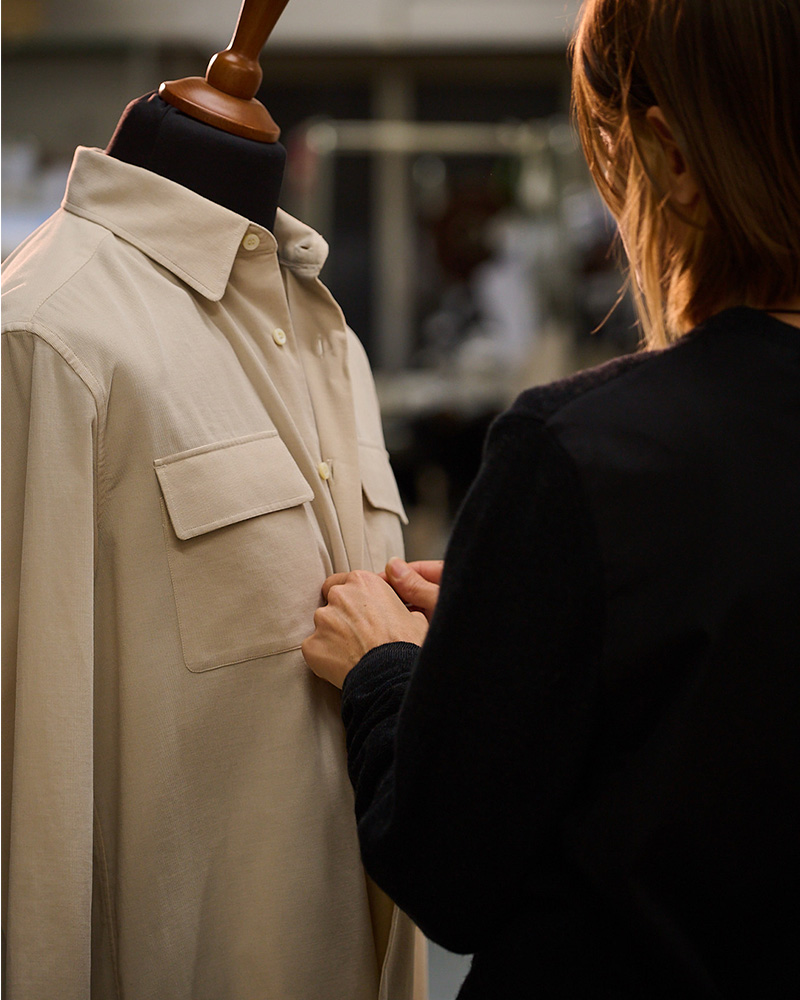
In contract shirt manufacturing, for example, the production process is closely connected to the identity of the brand and to the quality standards established for the collection.


How to Prepare Before Contacting a Clothing Manufacturer
One of the most important aspects of managing MOQ effectively is arriving prepared for the initial discussion with the manufacturer.
Before contacting a production partner, it is useful to define:
product category;
market positioning;
preferred materials;
indicative quantities;
collection timeline;
required level of customisation.
Technical tools such as a tech pack also make discussions clearer and more effective. Accurate documentation enables the manufacturer to assess the complexity and feasibility of the project more reliably.
Many difficulties begin with incomplete or poorly structured requests.
Without clear information, a manufacturer cannot accurately estimate lead times, processes or realistic minimum quantities.
In luxury, project preparation is already part of the quality of the final garment.
Production does not begin when the garment enters the production line. It begins much earlier, during development and planning.
MOQ and Seasonal Production Planning: What to Consider
Seasonal planning also has a direct influence on MOQ.
Fashion production follows precise calendars that require close coordination between product development, material sourcing and manufacturing capacity.
Not every seasonal collection has the same requirements. Volumes can vary depending on:
type of collection;
commercial season;
material complexity;
delivery deadlines.
For this reason, MOQ should also be evaluated in relation to the seasonality of production.
Manufacturing requirements can change significantly between summer and winter production, just as they do between trans-seasonal collections, as explored in our guide to spring vs autumn fashion production.
At the same time, effective seasonal production planning makes it possible to distribute volumes more efficiently and reduce production inefficiencies.
In luxury manufacturing, the relationship between timing and production is particularly sensitive. Planning development and industrialisation far enough in advance helps protect both quality and production continuity.
The Confezioni Gallia Approach: How We Manage Production Volumes
At Confezioni Gallia, MOQ is not treated as a rigid threshold. It forms part of a broader assessment of the production project.
Each collection is evaluated according to:
garment structure;
materials;
technical complexity;
brand objectives;
timing;
production continuity.
This approach allows us to build a transparent dialogue with the client and identify the most appropriate balance between quality, manufacturing sustainability and industrial organisation.
Within our production model, industrial efficiency does not replace craftsmanship.
It supports it, providing stability and control even across complex production programmes.
It is precisely this balance between manufacturing structure and Italian craftsmanship that allows us to work with international fashion houses and brands while maintaining high standards throughout the supply chain.
To learn more about our approach to contract manufacturing and collection development, you can contact us directly.