

Fashion Tech Pack: What It Is, What It Includes and Why You Need One
In fashion, creativity alone is not enough to turn an idea into a product that can actually be manufactured. Between the creative concept and production lies a crucial technical stage: the fashion tech pack. This is where design becomes a structured set of precise, shareable and repeatable information.
In contract manufacturing, the tech pack is an essential tool for coordinating the brand, pattern makers and manufacturing partner. Without clear technical documentation, even the strongest concept can lose consistency during development and construction.
In the luxury segment, this becomes even more important. The quality of the finished garment depends on the ability to translate every creative detail into technical instructions that can be clearly understood, tested and reproduced. Fit, proportions, construction and finishing must all be accurately defined before production begins.
For this reason, a fashion tech pack is much more than a technical specification sheet. It is a strategic communication tool connecting product development, sampling and industrialisation — a common language between design and manufacturing.
As explored in our guide to fashion product development, the quality of a collection is established long before production actually begins.
Tech Pack: Definition and Role in the Fashion Supply Chain
A clothing tech pack is a technical document containing all the information required to develop and manufacture a garment. Within the fashion industry, it acts as the connection between creativity and production.
In practical terms, the tech pack enables the manufacturer to understand how the garment should be constructed, which materials should be used and which quality standards need to be met. It is therefore a central tool in managing the production process.
When working with specialist workshops and contract manufacturing partners, a well-prepared tech pack helps reduce misunderstandings, rework and interpretation errors. The more precise the document, the greater the consistency between the original concept and the final garment.
In luxury manufacturing, where every construction detail contributes to the perceived value of the product, the tech pack takes on an even more strategic role. It is not simply a matter of specifying measurements and seams, but of defining how the garment should perform over time: its fit, balance, stability and construction.
The tech pack should therefore never be treated as a basic operational attachment. It is an integral part of the garment’s technical development and of the dialogue between the brand and its manufacturing partner.
What Does a Complete Fashion Tech Pack Include?
A complete garment tech pack should contain all the information needed to manufacture the product without leaving room for ambiguous interpretation.
Its structure can vary depending on the complexity of the garment, but it will generally include:
front and back technical drawings;
construction details;
measurements and size charts;
material specifications;
trims and components;
stitch and seam specifications;
garment construction instructions;
fitting notes;
labelling and packaging instructions.
For luxury production, even more detailed information is often required, including stitch density, internal construction, concealed reinforcements, dimensional tolerances and high-end finishing specifications.
A technical garment specification should not focus solely on how the product looks. It should also anticipate how the design will behave during manufacturing.
The fabric selected, for example, can affect:
collar stability;
seam tension;
response to washing;
behaviour during garment construction.
This is why technical product definition is closely connected to sampling and pattern making, where the information contained in the tech pack is translated into physical tests and practical verification.
Tech Packs and Sampling: How They Work Together
The relationship between the tech pack and sampling is one of the most important aspects of fashion product development.
The tech pack defines the theoretical specifications of the garment, while sampling determines whether those specifications work in practice.
During prototyping, the manufacturer uses the tech pack to create the first physical sample. At this stage, several elements may emerge that require further refinement:
proportions;
fit;
fabric behaviour;
compatibility between design and construction.
This is the point at which the tech pack stops being a static document and becomes a dynamic product development tool.
Every prototype revision may lead to technical updates: measurements can change, construction methods may be adjusted and materials or finishing specifications may need to be reconsidered.
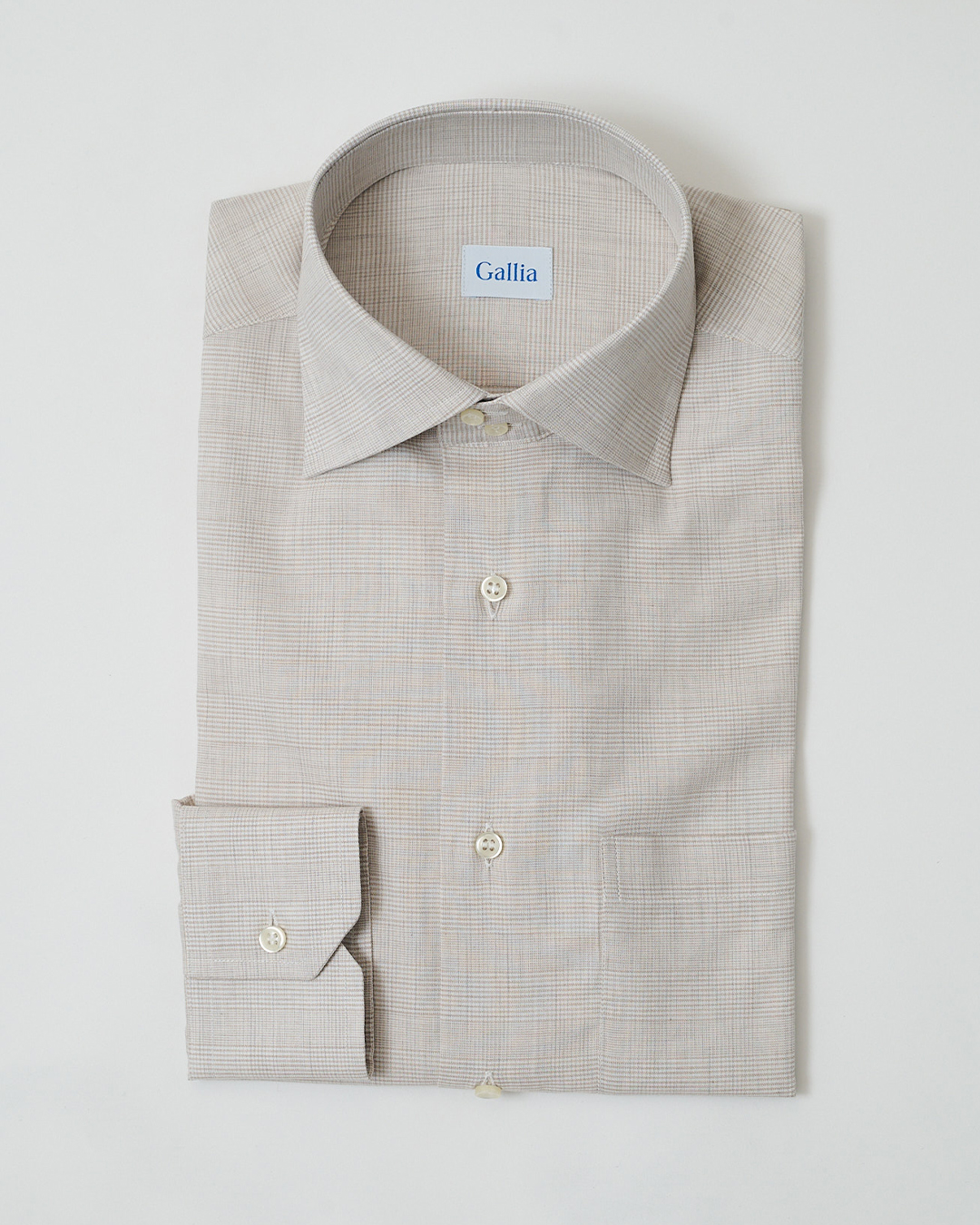
This continuous dialogue between technical documentation and the physical sample is especially important in luxury shirt design, where even very small variations can affect the overall balance of the garment.
In luxury production, a prototype is not simply used to “see the garment”.
It is used to verify whether the product is technically stable enough to be manufactured consistently.
The Most Common Tech Pack Mistakes and How to Avoid Them
Many production issues begin with an incomplete or unclear tech pack. Even apparently minor errors can lead to delays, rework or inconsistencies during manufacturing.
Some of the most common issues include:
incomplete measurements;
unspecified construction details;
materials described too generically;
unclear technical drawings;
missing tolerances;
insufficient fitting information.
When working with a contract manufacturer, an imprecise tech pack often forces the manufacturing partner to interpret missing parts of the design. This increases the risk of discrepancies between the brand’s original idea and the finished product.
In the luxury segment, where precision is an integral part of product value, these areas of ambiguity need to be reduced as much as possible.
A tech pack should therefore be built as a coherent system of information. Including technical data is not enough: the documentation must be clear, current and genuinely usable within the production environment.
The quality of the garment specification directly affects the quality of the manufacturing process itself.
Tech Packs and Contract Manufacturing: What a Manufacturer Expects
In the relationship between a fashion brand and its manufacturing partner, the tech pack provides the operational foundation for the entire collaboration.
When a manufacturer receives a new project, the technical documentation should make it possible to understand:
the objectives of the product;
the required construction;
the expected quality standards;
potential technical challenges;
the brand’s expectations.
In luxury contract manufacturing, the manufacturer does more than simply execute instructions. It becomes a technical partner responsible for translating the creative concept into a stable, repeatable manufacturing solution.
For this reason, a tech pack for contract manufacturing should facilitate communication between design and production.
A specialist manufacturer expects:
technical clarity;
consistency across the design;
verifiable information;
clearly specified materials;
instructions compatible with the manufacturing process.
When the tech pack is structured correctly, production becomes more stable, efficient and predictable.
The Confezioni Gallia Approach: How We Work with Tech Packs
At Confezioni Gallia, the tech pack is an integral part of the product development process. We do not treat it as an administrative document, but as a technical coordination tool connecting the brand, pattern making and production.
During the initial stages of a project, we work with the client to analyse:
garment structure;
materials;
construction challenges;
fit objectives;
required quality standards.
This approach allows potential issues to be identified at an early stage, reducing errors and helping to optimise the subsequent industrialisation process.
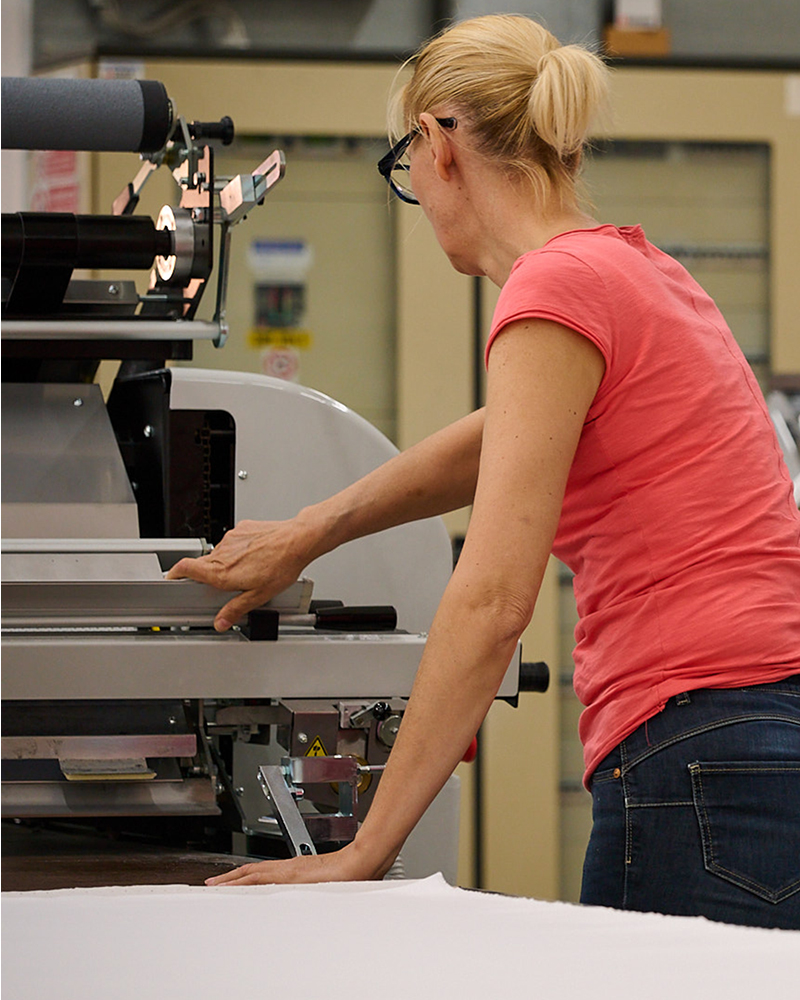
Work on the tech pack is closely linked to cutting and garment construction, where every technical specification must ultimately translate into real manufacturing precision.
In luxury, quality does not begin at final inspection.
It begins with the way the process is designed.
It is precisely this balance between industrial organisation and Italian craftsmanship that enables us to develop garments that are consistent, stable and aligned with the standards expected by international fashion houses.
To learn more about our approach to product development and contract manufacturing, you can also contact us directly.